
Citizen Science talk in Parton delivers advice on Invasive Non-Native Species
Tracy Starks, of the Galloway Fisheries Trust (GFT), delivered a talk about the Trust's work in tackling Invasive Non-Native Species (INNS) at Parton Village Hall on March 19th, as part of the Glenkens Community Spaces Network's 'Citizen Science' talks programme.
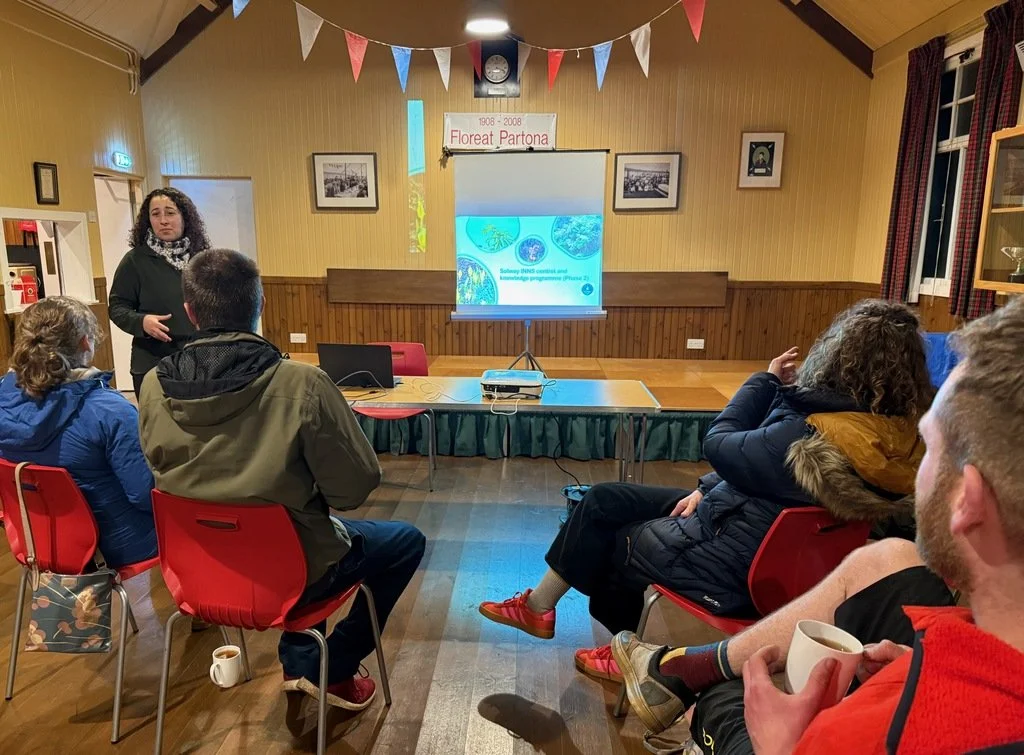
Tracy Starks delivers INNS talk at Parton Village Hall.
The Trust is looking for support from volunteers to identify INNS and volunteers to take part in INNS control on rivers and waterways throughout the Glenkens.
What is the problem with INNS?
INNS can have a range of detrimental effects on local ecosystems, reducing biodiversity and outcompeting native plants, and additionally some can have risks to human health or negative economic impacts.
The GFT has been funded by The National Lottery Heritage Fund and Kilgallioch Wind Farm Community Fund (administered by Foundation Scotland) to locate, control and manage priority INNS across seven river catchments, over the period 2024 - 2027.
How you can help
Members of the public are invited to support the project, either by reporting sightings of the priority species (listed below) to tracy@gallowayfisheriestrust.org, or by practical volunteering to help the team to remove and control these plants. Full training will be given.
Additionally, those using the water at Loch Ken are requested to decontaminate any equipment which has been in contact with the water at one of the GFT's Biosecurity Stations Four biosecurity stations which can be found at Galloway Activity Centre, Crossmichael Marina, Loch Ken Holiday Park and public slipway Boat O’Rhone. The Loch Ken Trust have created a video to explain how the stations should be used: https://lochken.org.uk/about/loch-ken-ranger-service/ranger-blog-posts/ranger-blog-post-biosecurity/
The key target species for the GFT's work in the area are:
Japanese Knotweed, originally imported to the UK as an ornamental plant but now recognised as an invasive plant which it is illegal to plant or cause to grow in the wild under Schedule 9 of the Wildlife and Countryside Act. How to identify Japanese Knotweed pdf
Giant Hogweed was also introduced as an ornamental plant but is now listed under Schedule 9. Contact with its sap can cause blistering of the skin after exposure to sunlight which means it is vital to avoid any contact with the plant. How to identify Giant Hogweed pdf
Himalayan Balsam, another invasive plant listed under Schedule 9, spreads easily and quickly through its explosive seed heads, and dominates river banks, dying back in the winter. The dense vegetation can increase the likelihood of flooding in the summer, and the fact that the plant dies back over an extensive area can contribute to river bank erosion in the winter. How to identify Himalayan Balsam pdf
American Skunk Cabbage is not listed under Schedule 9, but is challenging to control as seeds can remain dormant but viable for up to nine years, and each plant can produce hundreds of seeds, meaning that control of flowers before the plant seeds can be very important. How to identify American Skunk Cabbage pdf
American Signal Crayfish, which were introduced as a food product in the 1970s and 80s, escaped into waterways, carrying a disease to which the smaller, native White-Clawed Crayfish has no immunity. This has had a severe effect on the native population, and Signal Crayfish are also listed under Schedule 9. How to identify American Signal Crayfish pdf
GCSN Citizen Science talks are being delivered across the Glenkens in 2026, thanks to funding from the Galloway Glens Legacy Fund. Keep up to date with activities by signing up to the mailing list here: http://eepurl.com/jB7-X6