
Cutting off our rural communities
Earlier this year the 520 bus, which ran from Castle Douglas to Dalmellington, changed its route, now finishing in Carsphairn. There is now no bus connection between the Glenkens and East Ayrshire.
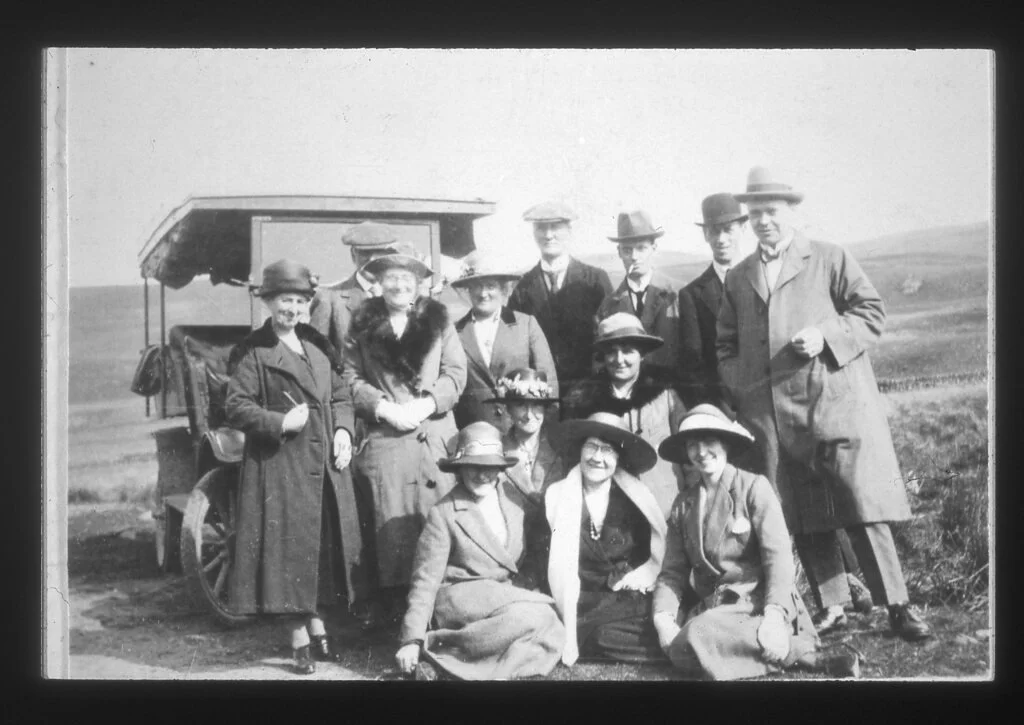
The service linking East Ayrshire and community has Galloway has been running for over 100 years, ensuring a connection between the regions, and that Carsphairn residents are able to access their closest amenities. This vital public transport service has now been cut; pictures is the Carsphairn to Dalmellington bus from back in the 1920s, courtesy of the Carsphairn Heritage Archive.
For those without a car, the bus was not just convenience, but necessity. Many in Carsphairn and surrounding areas are now stranded without this vital connection, unable to access healthcare services, basic supplies and connection with Ayrshire and further north.
The impact goes beyond welfare issues, it also affects the economy and tourism. The A713, the main artery through SW Scotland has been severed. There is now no way to travel the ‘Galloway Tourist Route to Ayr’ by public transport!
Despite petitions and objections from local residents and community councils on both sides of the border, SWestrans, public transport providers for SW Scotland, have refused to reinstate the service, stating the reasons for cessation being a combination of low use of the service and absence of bus subsidy funding.
Their advice was that the community should contact Galloway Community Transport to see if they could help, effectively telling us that we should sort it out ourselves. This is an unacceptable response based on a numbers game, completely dismissing the wider ramifications of cutting off this part of the country from a public transport service.
Carsphairn is an area of Scotland which, over the last 50 years, has seen 80% of its land re-purposed for renewable energy production namely commercial forestry plantations and wind farms. We are more than punching our weight in what we provide Scotland and the whole of the UK. Part of the price is low population. Dubbed the new ‘goldrush’, the land is worth premium prices that only large companies can afford. Even if they could, many people do not wish to live in proximity of wind farms due to the impact on views and the noise.
Commercial plantations destroy biodiversity and the landscape. Both cause dangerous disruption on small country roads. It becomes a vicious cycle where less people and less biodiversity mean a stronger case for more energy developments. Even with community benefit funds and some farmers receiving much needed income from hosting turbines, it is local residents who bear the brunt of multi-million pound investments.
Surely it is not too much to expect a public bus service? Again a vicious circle, low numbers justify pulling the bus, resulting in lower numbers using or needing a bus, effectively eventually killing what life this small community has left.
The Scottish Government purports to support rural Scottish communities, stating that they are fundamental to wellbeing, economy, environment and cultural identity, and offer solutions to global challenges like climate change, Despite this, we are still seeing declining rural populations - not just buses, schools are also being closed. The push is towards centralisation - everyone living in urban/town conurbations.
This is an issue much wider than how many people use that bus. SWestrans’ original decision and subsequent dismissive response to objections is il-considered and short sighted. We need, indeed deserve, support forthis vulnerable community. We need it for fairness and wellbeing, but we also need it for economy and tourism.
South West Scotland is a beautiful region with much to offer yet still largely under-recognised nationally - why cut it and its people off still further?
Katch Holmes
You can sign the petition to reinstate the 520 bus at: https://www.change.org/p/reinstate-the-520-bus-route-to-aid-our-community.