
Building nature networks in the Glenkens
Do you want to play a part in helping nature in the Glenkens? Dalry Community Council (DCC) has received Inspiring Scotland money to explore the possibility of establishing Nature Networks in the Glenkens.
Supported by the Glenkens Community and Arts Trust (GCAT), the Land Use subcommittee and the GSA Biosphere, some really interesting work is going on about how we could improve the connectivity of habitats around Dalry and beyond to better support our wildlife.
The work will also include opportunities for members of the community to learn how to monitor changes in biodiversity and land use around them. In a separate project, DCC has received funding from SP Energy Networks (SPEN) for a Glenkens Pollinators Project, which will see around 130 fruit and nut trees planted in people’s gardens and community spaces right across the Glenkens.
So what are Nature Networks?
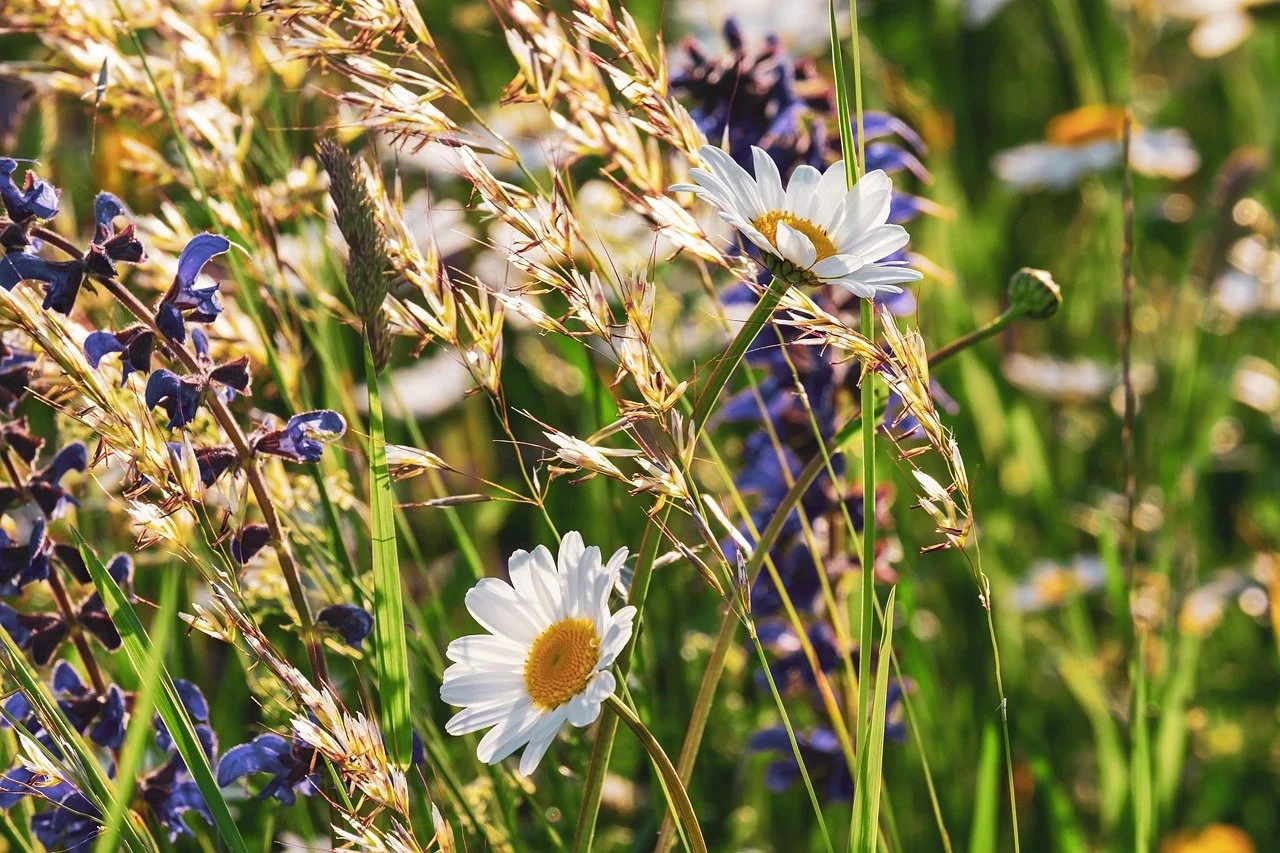
Nature Networks are corridors and ‘steppingstones’ of wildlife-friendly habitats that connect existing nature-rich areas. They are important to help nature cope with land use change and the climate crisis, and also provide a network of easily accessible natural spaces for the local community.
Barriers and Opportunities
The project’s first ‘strand’ builds directly on the work done by the Glenkens communities in the past few years on Land Use, captured in the Land Use Vision: www.glenkens.scot/ land-use. The big goal is to establish Nature Networks in the Glenkens over the next few years; the first step is to see if this is possible. This work is being led by Steve Connelly, a land use and planning consultant based in Dalry, who will be having conversations with landowners, farmers and community groups between now and Christmas. By the end of the year, we’d love to have a small group of people ready to start a pilot on the ground when further funding is hopefully secured next year.
It would be great to also have a larger group of land managers and communities who are interested in doing more work to develop Nature Networks, and by then we should have a good scientific understanding of where the opportunities are to make the most difference with the smallest interventions. It could be as simple as planting a short ‘corridor’ of trees and scrubby vegetation along a field edge – a ‘hedgehog highway’ – to link existing woodlands. Or reducing grazing pressure on grassland in the spring to allow scarce plants to flower and seed before allowing cattle in to graze. Or planting fruit trees to create a network of food sources for pollinating insects – of which more below!
If you are interested in talking about possibilities on your land, please email Steve Connelly at: stephen.connellyy@gmail.com.
Monitoring and Citizen Science
The second strand will focus on nature monitoring and citizen science. Niki Inglis, an engineer and sustainability consultant based in Carsphairn, is leading this work and says:
"This is an exciting opportunity for members of the community to get involved in citizen science and help record the impacts of our changing world on nature and biodiversity."
A handful of locations across the Glenkens have been selected as pilot sites for nature monitoring this year, from forestry and agriculture such as Carsphairn Community Woodland (CCW) to local public spaces such as New Galloway Community Garden; all habitats are valuable to wildlife and biodiversity. We hope to hear from other communities, networks or sites which may be interested in getting involved.
Volunteers from the pilot sites will be attending a citizen science training on 2nd October in Dalry, led by Malcolm Haddow from South West Scotland Environmental Information Centre (SWSEIC). They will learn best practices and record their observations on apps such as iNaturalist. Places are available for members of the public to join the training – spaces are FREE but limited so please get in touch with Niki soon to reserve your place.
Partnering with the Glenkens Community Spaces Network (GCSN), we are also looking at ways to embed Citizen Science in our communities, starting with a series of citizen science talks at Halls across the Glenkens more details to follow as the program develops.
Keep up to date with all of this and more at the Glenkens Hub. Please also get in touch on Niki.Inglis@protonmail. com if you know of a community, network or site which might like to get involved or if you have any questions.
Dispersed Orchard Map
Glenkens Pollinators Project: The Dispersed Orchard
The Glenkens Pollinators Project is already well underway. Led by Abi Mordin from Propagate on behalf of DCC, the project plans to get around 130 fruit and nut trees planted across the Glenkens. This will create a nature network and pollinator corridor boosting biodiversity while also providing a source of healthy food for humans.
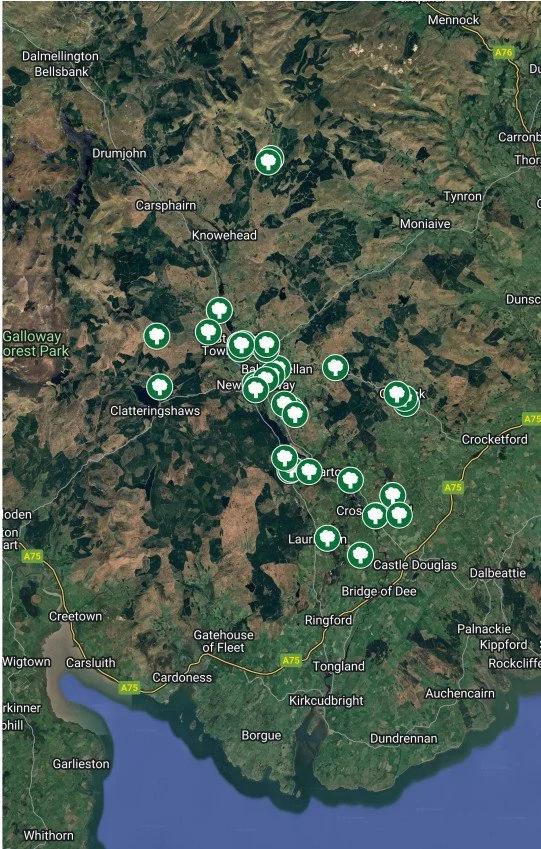
There was a fabulous response to the call for sites, with over 40 people nominating areas from their own gardens to community spaces. The map here shows the spread of the ‘dispersed orchard’ and already we can see some great pathways and clusters emerging.
The next step for the Pollinator Project is to hold a community planting day and hand out the trees! This will probably be on 8 November at Dalry Library, where we will create a new micro-orchard. There will be a demonstration on how to plant, stake and protect your trees, plus a host of fruit and nut themed activities. Details will be confirmed on the Glenkens Hub.
Going forward, the Pollinators Project is joining forces with Glenkens Nature Networks to increase impact – we’ll be encouraging recipients of fruit and nut trees to get involved in the Citizen Science project and record biodiversity quite literally on their doorstep.
So it’s an exciting time for the Glenkens as we work across communities and organisations for the benefit of our wildlife and environment. Watch this space for more!
Niki Inglis