
An interview with Balmaclellan farmer Robin Jardine
Land and living in the Glenkens
Does farming matter? This was a question posed by Minette Batters (former Chief Executive of the National Farmers Union) in her introduction to the Farming Profitability Review, published in 2025. “Whether farming matters and how it is valued is fundamental to the future of farming across the UK” she stated. In a series of articles, the Gazette wants to show how working the land matters to all of us living here. Through interviews with local farmers and landowners, we want to explore some of the issues facing the people who work in agriculture and forestry in the Glenkens. These are the people who shape the landscape so many of us love. They have a big influence on our lives as the producers of the food and materials we need to survive and thrive. We want to give them a voice and learn from them directly what matters to them, what they love about their work and how they deal with some of the problems they face.
Describing himself as a traditional farmer living in modern times, Robin Jardine is a ‘well kent’ figure in the Glenkens farming community. Born at Upper Hardland Farm, on the road between Balmaclellan and Bogue, he has lived and worked here all his life.
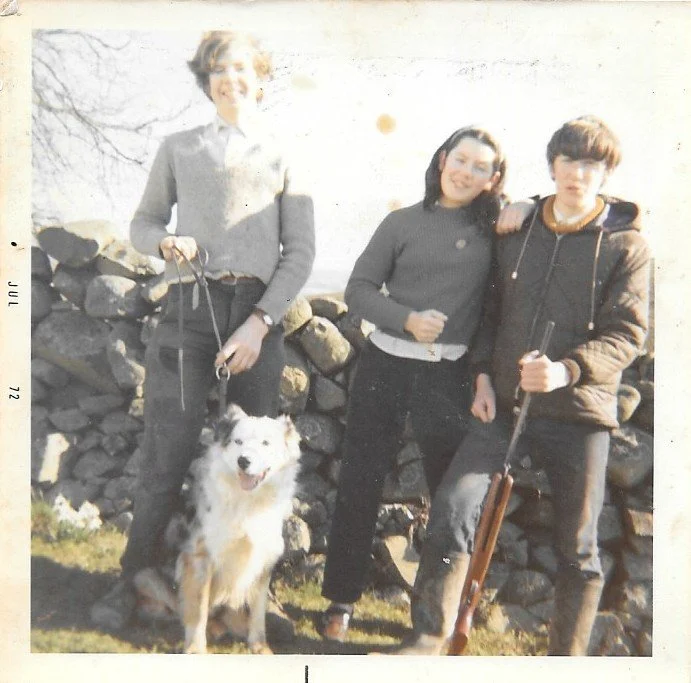
Robin (left) as a teenager, with his dog and friends.
Farm and family
“This is a family business stretching over five generations,” Robin began. “My great granny came here 100 years ago and bought the land. My grandfather took it on from her and was particularly fond of the working horses. I inherited it from my father and it’s my son who runs the farm these days; I just do a bit of tinkering now. Today the family farms over 1000 acres, some of which is rented, and the rest we own ourselves.
As a child, I went first to Balmaclellan school and then to Dalry. But I didn’t much like it and I learnt more outside school than in. As a teenager, I used to work on the farm after school with my father and sometimes even do contract work with him. It was hard physical work – sometimes hoeing turnips and tatties grown as fodder for the cattle – but I liked it.
As far as careers go, I never thought about doing anything else, apart from maybe going into the army. But when I left school at 15, I stayed on the farm and worked there for my family – it was almost expected of you. There was no overtime and no holidays. After paying for my keep, I had a fiver left to spend. Some of the local working men - Stanley McCarthy, Johnny Stewart, Duke and Charlie McMurray - used to come and help on the farm to augment their wages. It was strenuous work but we had a bit of fun together; John Ewart in particular had a twinkle in his eye and used to keep us going when we were flagging. Brian McMurray, Duke’s son, came and worked here in years after as well. Andy Kirkpatrick started coming here after school and he’s still coming to help with calving and lambing.
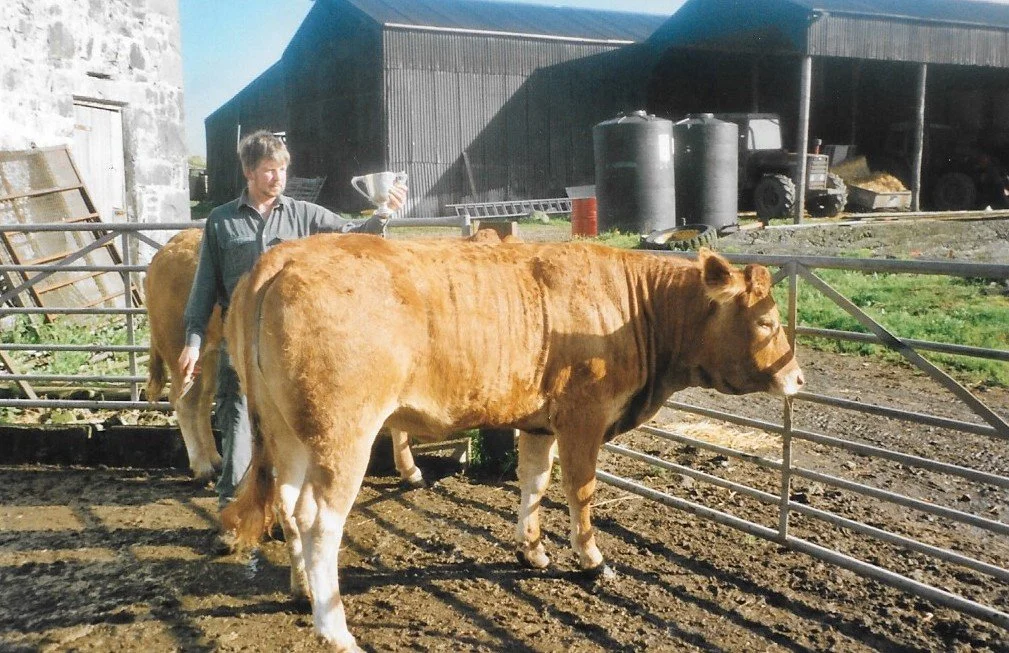
Robin with his winning Limousin heifer - they came first at the 1997 Glenkens Show.
A year on the farm; the annual cycle
There is no such thing as a typical working day on the farm; it depends on the season. From November onwards I’m mucking out and feeding cows in the sheds as they’re taken indoors off the pasture for the winter months. This means you get to know the cows; they’re all unique with their own personality. When I was a boy, each one had their own stall in the byre which they knew as theirs and they’d come back to the same one when they had been outside.
Some of the smarter cows would pinch food left in other stalls as they headed back to their own. They all have body clocks and know when to come inside, or they’ll respond to being called by someone they know. And they have a conscience; they know when they shouldn’t be grazing on someone else’s land; if you have to separate two herds, the ‘invaders’ are easier to chase back onto their land. One memory I had that stands out was whilst I was walking the cows back home from a field in New Galloway. One of the cows collapsed and died on the way. Tragically its four month old calf followed the herd home but the next day I found it standing with its dead mother – it had crossed the Ken Bridge by itself and wouldn’t leave her. It was really sad to see.
From February onwards the spring calves and lambs start arriving and it can be full on, with plenty of stress and not much sleep. But I love this time of year – all the new life appearing. But sometimes you’re dealing with both life and death in the same moment; a difficult labour can kill the mother. I’ve learnt a lot of techniques over the years to keep cows (and calves) alive when they are calving - pouring cold water in their ear or putting straw up their nostrils - anything to shock them and make them take a breath!
With the cows kept inside over the winter, its’ easier to assess their condition; we bring them into the maternity ‘wing’ in the byre and check them regularly. You can often judge from feeling the calf’s feet and the size of their head if it’s going to be a difficult birth. If it’s a breach birth, we can handle that ourselves, thanks to the invention of a calving jack (a piece of equipment that, used respectfully, can help pull the calf out) but if it’s a Caesarean, then we need to bring in the vet. You have to accept that there will be deaths among the livestock but, to me, this isn’t simply an economic loss; I always value the life of the animal as part of our farm.
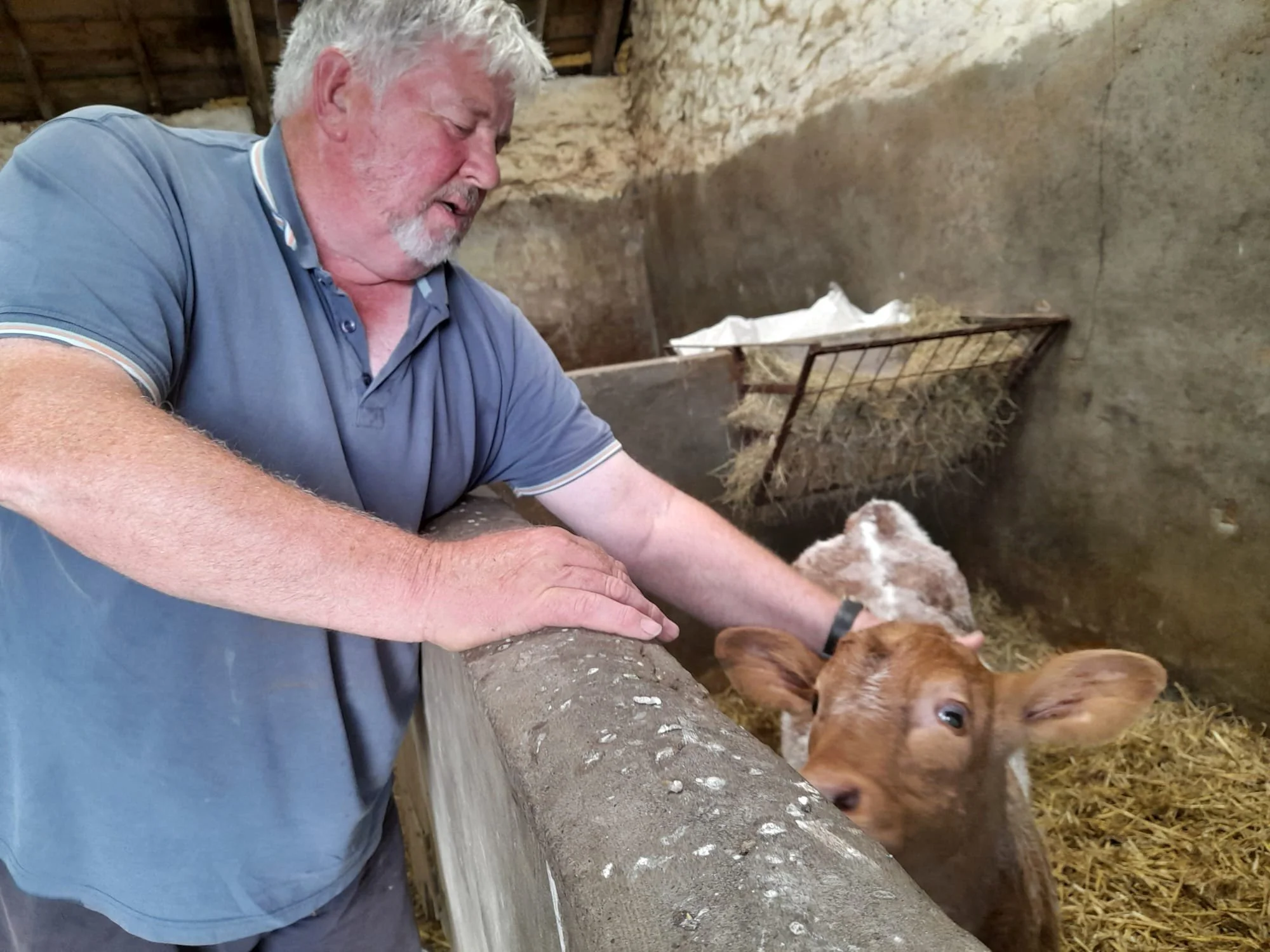
Robin with Bambi (see Gazette Issue 155).
Once they are born, calves and cows are kept together in sheds, according to the ’batch’ the calves were born in. Once they are strong enough, the calves are transferred to fields but still kept separate so that the same age groups can run together. The calves need constant watching and you always know something is wrong if there is a lot of ‘shouting’. Cows don’t make a noise ordinarily, except at feeding time. But when something goes wrong, they will shout at full blast!
Lambing of the sheep varies according to whether they are highland or lowland breeds; we bring the lowland ones inside to lamb whilst the hardier highland ones stay out. We know when different groups of the lowland ones will lamb and move them inside in batches. And we know which ones are carrying singles or twins as they’re all scanned in January. A healthy ewe with just one lamb can sometimes be ‘persuaded’ to rear an extra lamb whose mother has died, or from a set of triplets. Bad weather during lambing season is the biggest killer of new lambs; it’s terrible but we can’t do anything about it as we can’t keep all the new lambs inside for long periods; usually they are put out with the ewes two days after they’re born.
The summer is mostly about managing stock and moving it around to different fields. There’s also the job of shearing the sheep. That’s done for welfare reasons only these days; in my lifetime the wool has never had much value and we don’t get a good price for it. In the 1950s and 60s, the income earned from the sale of wool paid for the annual rent of some farms in the Glenkens... but not now.
In the autumn the lambs and suckler calves are sold at market, mostly locally in Castle Douglas; this is the ‘harvest’ time for beef and sheep farmers. The suckler calves are usually between five and six months old and we sell them to others to raise them for the meat market. I hate taking the calves off their mothers at this time; some of the older cows know what’s coming and they don’t like it either. We also sell some sheep for breeding purposes.
Off the farm; the markets and the shows
The livestock market is the place where you can see the true value of your livestock realised and they’re great social events too! Once the auction finishes, it’s a time to relax and enjoy yourself, to catch up with people you might not have seen earlier in the year, compare prices for livestock and have great conversations. There’s a real sense of camaraderie at these events and you’d meet some people you only saw once or twice a year. But sadly the sales these days are quicker and there aren’t so many people around afterwards; it used to take me fifteen minutes to get to the bar for a drink in the Market Inn after a sale – I’d be too busy talking to people on the way to the bar! There were some great characters and we used to have a bit of fun together, joking and playing pranks on each other!”
One of the things I really enjoy about my work is breeding animals; as a farmer you’re always looking to improve your stock. I’ve been breeding Scotch Mule sheep since 1987 and we breed our own Blue Faced Leicesters on the farm. It’s a whole year of thinking and planning, involving a lot of mental homework. It’s not only keeping track of the quality of our own stock but also those of other farmers that you might want to breed from and investigating the pedigree of the ones you’re interested in. We also travel a fair bit for it; I’ve been to tup sales in Stirling, Ballymena, Hawes and even to markets in Wales! And I always look forward to lambing time to see what the ‘product’ is. It’s a great sadness if a lamb dies in birth that might have been a potential show winner.
The Glenkens Show is another event I enjoy and I’m on the committee that organises it. It brings the whole community together and it’s a very sociable occasion, lifting the spirits of the farming community. It’s also a chance to show off your skills of stockmanship as you’re judged on the stock you’ve bred during the year. There is quite a lot of competitive camaraderie involved in showing animals; there’s nothing better than seeing your own lambs beating those of your pal’s but at the end of the day, you want everyone to do well and win awards.
Planning for the show is a year-long job. The committee decides in advance who to ask to do the judging and then, if they accept the invite, we need to organise accommodation for them. One of my roles at the show is looking after the judges – they often come from outside the area. It’s a big thing to be asked to be a judge. I’ve done it once at another show. The Glenkens Show has got a good reputation, bringing people in from further afield so it’s good for the local pubs and hotels. And it’s a great day out.
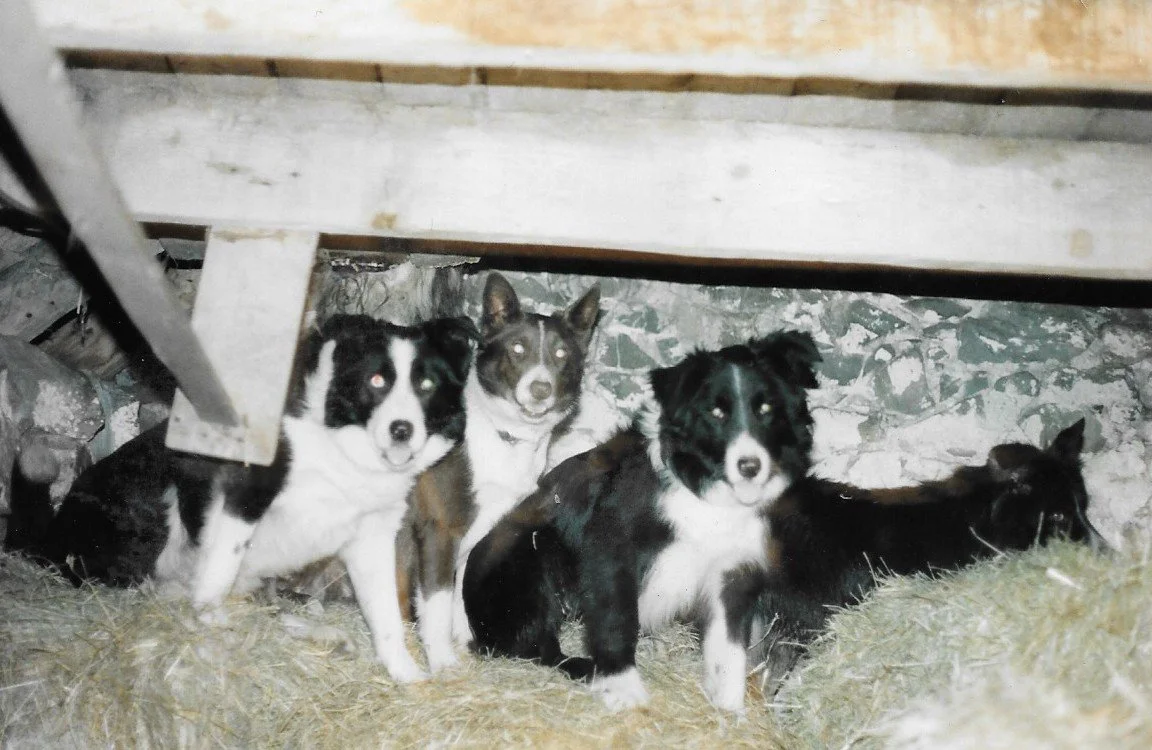
Some of Robin's working dogs.
My animals, and especially my dogs
In spite of running a business producing livestock for the meat market, it matters to me that my animals are well looked after and have good lives - I care about them. I have sometimes had soft spots for particular ones but I try not to get attached – they’re not pets and we rely on them for an income. The dogs are different, however. Although they’re working animals, they’re loyal friends and I love having them around. We have always had collie dogs on the farm to help with the sheep.
When I was around 11 or 12 years old, I was allowed my own dog, Laddie – that was special, even though he was useless as a worker. Ben was my best dog ever. He was quiet, hard working and so easy to train...but he liked chasing cats! We were very close - when you grow up with them, you have an affinity with your dog. I would have done anything to protect him.
Changes in farming and the landscape
The way we farm in the Glenkens has changed a great deal in the last 100 years in terms of what is produced and the size of operations. At one time all the smaller Glenkens farms used to have dairy cattle and sold their milk to the Milk Marketing Board. In the 1930s our family had 13 cows and 125 ewes on 250 acres; that’s what sustained two families. The cows were dual purpose, reared for both dairy and beef. Nowadays we have a herd of 100 beef cattle and 1,500 ewes. There is no longer any dairy farming in the area and no Milk Marketing Board; they disappeared and the farms modernised. The smaller farms were squeezed out as it became too expensive to collect milk from them. Another change was the progression from using horses on the farm to tractors; no one has working horses these days.
Every farm in the area used to raise a pig and slaughtering it was a big and often bloody occasion. It was killed by hitting it with an axe and if the person doing that didn’t get their aim right, then they were in danger of being attacked by a very angry pig! We used every part of the animal apart from its eyes and teeth and we cured our own hams on the farm.
In my lifetime, the biggest change has been from traditional haymaking to making silage to feed the livestock during the winter months. That has been a huge labour saving practice as you don’t have to wait for good weather to cut and store the grass. You can cut and bale the grass when it’s wet, the bales get wrapped in plastic and you can move them around as needed.
The speed at which we work has also changed. When we used to make hay, we’d cut the grass with a reaper and then turn it over a few days before baling it. That meant we had time to see things; if I found a peewit’s nest, I’d put a pile of stones nearby and I used to watch out for them, especially when there were foxes about. I grew up with these birds and have a real affinity with them – they were your friends. It would give you a lift emotionally when you heard the first peewit or whaup’s call of the year.
Anther big change in the Glenkens landscape during the time I’ve been farming has been the expansion of conifer plantations. I think there is too much commercial forestry these days and it worries me that there is so much Sitka spruce planted on land that used to be farmed for food; if we keep on planting up farmland with trees, then there’ll be less land for growing food. Other changes are the loss of partridges from the area, as a result of the fact that we don’t grow grain here anymore. And fresh water oysters, which used to be everywhere, are gone due to the expansion of commercial forestry affecting the rivers and acidifying the water.
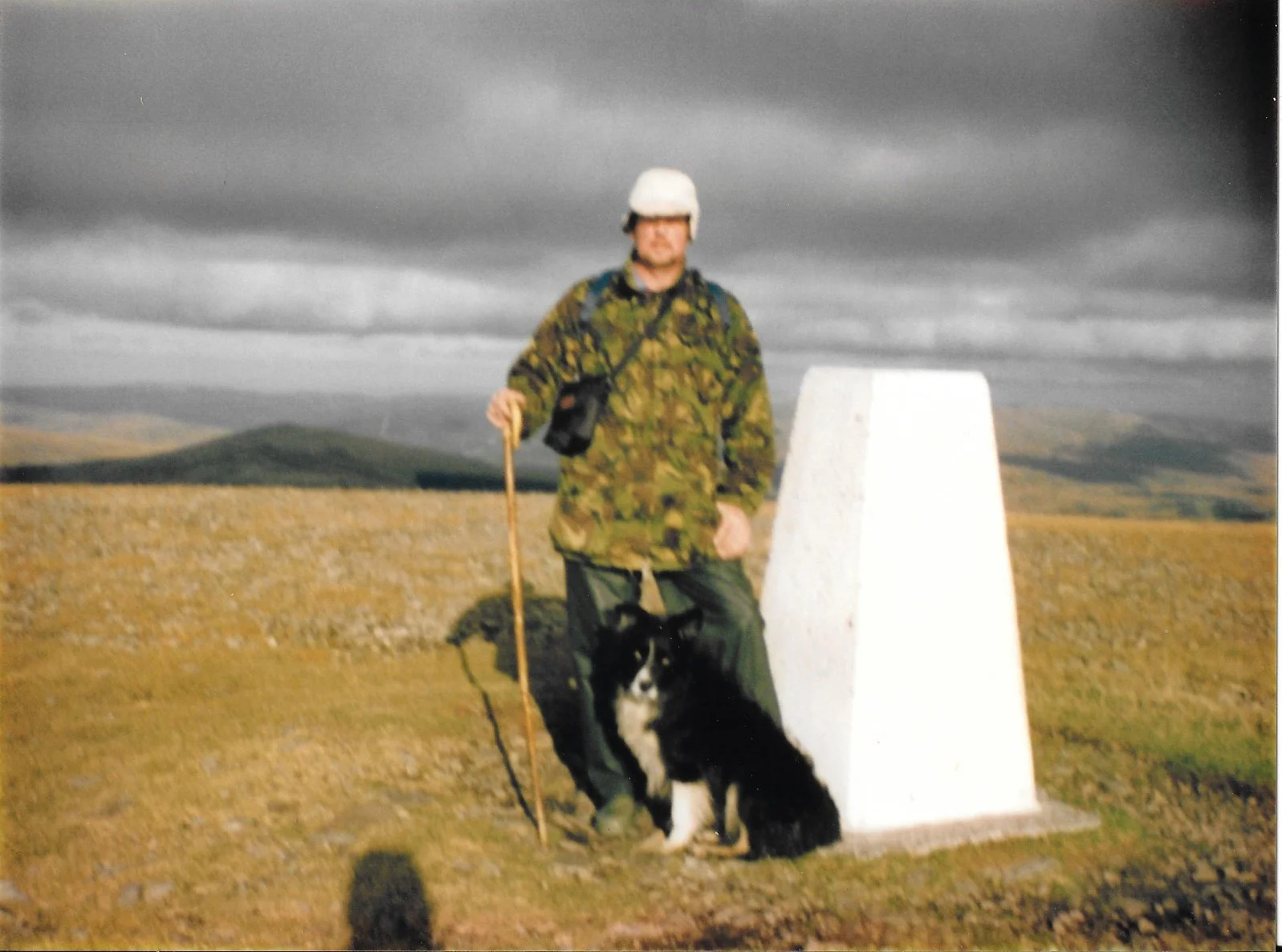
Robin with Ben ("one of the best dogs ever") on Corserine some time in the 1990s, helping gather the ewes on the Garroch Estate.
I also have very strong feeling about initiatives like reintroductions of birds of prey – I respect every animal for what it is but I do object to the uneven struggle the smaller birds have against red kites, buzzards, ravens and carrion crows. And I don’t feel it’s right to have restrictions on farmers controlling predators. Farmers need to be able to protect their livestock. It frustrates me that the crow populations can’t be controlled; we have to apply for a licence to shoot them even when they predate on our lambs. The ravens, they’re the ones I dislike the most. They predate not only on young lambs and calves but also on other birds including the chicks of pewits and whaups.
Speaking as an environmentalist who cares about wildlife as well as being a farmer, that really gets me mad and frustrated because I’ve seen this so many times. Predators should be managed to protect the smaller ground nesting birds! So I completely disagree with the views of the RSPB and NatureScot who protect the predators. In my opinion we need local game keepers to keep predator numbers down. That doesn’t mean eradicating them, just controlling their numbers to allow some of the other birds to survive. Badgers are another animal that need controlling – when their numbers are as high as they are at the moment, they are damaging the hedgehog and bumblebee populations as well as the earthworms.
Farming is a challenge; every year is different and it will always be difficult...and not only because of the weather. We have to go along with the government’s agricultural subsidy regime – we can’t change that – and the bureaucracy that is part of the job now is very annoying. I feel that now there is a lot more interference in the countryside from people who don’t understand farming and don’t ask us what we want. It feels like so many decisions are imposed on us without understanding the consequences on our lives. It’s hard enough to make a living from the land and often the bureaucracy just makes it harder. But I still think there’s a future for farmers; people will always need to eat!